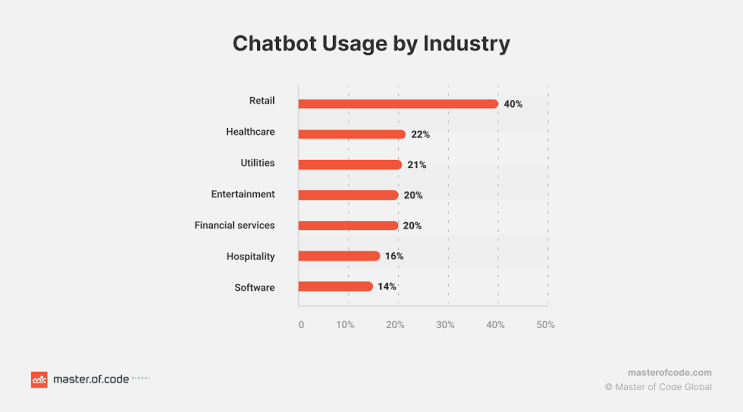
In recent years, chatbots have evolved from simple customer service tools into sophisticated AI-driven systems that streamline business operations, improve user experience, and drive revenue.
As we move further into 2025, chatbot trends are shaping the future of communication across multiple industries. From retail and banking to healthcare and logistics, businesses are discovering innovative ways to leverage conversational AI to stay competitive and relevant.
1. Retail: Personalization at Scale
Retailers were among the earliest adopters of chatbots, and in 2025, the focus is firmly on hyper-personalization. Powered by advanced natural language processing (NLP) and machine learning, modern retail bots can now:
- Recommend products based on user behavior and preferences
- Assist with order tracking and real-time inventory updates
- Enable seamless cross-platform shopping experiences
What’s new this year is the integration of chatbots with augmented reality (AR). For example, users can now visualize how clothing fits or how furniture looks in their homes through bot-guided AR interfaces. Additionally, voice-enabled bots are becoming more common, allowing customers to shop hands-free via smart devices.
2. Healthcare: Triage, Therapy, and Beyond
The healthcare industry has embraced chatbots to address several challenges, including patient overload and staff shortages. In 2025, healthcare chatbots will be used for:
- Initial symptom assessment and triage
- Appointment scheduling and reminders
- Mental health support through conversational therapy
One of the most promising chatbot trends in healthcare is their integration with Electronic Health Records (EHR) systems. Chatbots can now pull patient data securely to provide personalized health insights, medication reminders, and follow-up care instructions.
Moreover, regulatory compliance is improving. Many healthcare bots now meet HIPAA and GDPR standards, which increases patient trust and allows for more advanced use cases, such as remote diagnostics and chronic disease management.
3. Finance and Banking: Smart Advisors and Fraud Detection
The finance sector continues to be a major player in the chatbot revolution. Banks and fintech companies are deploying AI-powered bots to offer 24/7 customer support, fraud alerts, and financial advice. In 2025, these bots are taking on even more complex roles:
- Conversational financial planning, including investment advice
- Real-time transaction monitoring and dispute resolution
- ID verification using voice biometrics and facial recognition
A standout trend is the use of generative AI in financial bots, enabling them to simulate realistic human conversations and explain complex financial products in simple terms. Some fintechs are also integrating chatbots into voice assistants like Alexa or Google Home, enabling users to manage their finances through voice commands.
4. Travel and Hospitality: Real-Time Assistance
Travelers expect instant service and flexibility, and chatbots are perfectly suited to meet these demands. In 2025, travel chatbots go beyond booking confirmations and FAQs. They now provide:
- Real-time updates on flight status, weather, and itinerary changes
- In-destination support, such as local recommendations or language translation
- Automated check-in/check-out at hotels
Another emerging chatbot trend in this sector is the “concierge bot” — a fully virtual assistant that manages a traveler’s journey from start to finish. These bots integrate with airline, hotel, and local transport systems to deliver seamless experiences without the need for human intervention.
5. Education: Tutoring and Administrative Support
The education sector is undergoing a digital transformation, and chatbots are at the forefront of this shift. Whether in K-12 schools, universities, or online learning platforms, bots are being used to:
- Provide instant answers to student questions
- Offer personalized learning plans
- Automate administrative tasks like enrollment or tuition payment
AI tutors are increasingly adaptive, adjusting lesson difficulty based on the student’s performance. Some universities are using bots to improve retention rates by sending automated nudges, deadline reminders, or mental health check-ins.
A growing trend is the integration of chatbots with Learning Management Systems (LMS), allowing real-time support within the platforms students already use.
6. E-commerce and DTC Brands: Revenue Drivers
In direct-to-consumer (DTC) e-commerce, chatbots are more than just support tools — they’re revenue generators. Many online brands use chatbots to:
- Upsell and cross-sell based on cart contents
- Rescue abandoned carts with timed prompts or discounts
- Deliver post-purchase support and collect reviews
One of the most effective chatbot trends in this space is conversational commerce — where the entire purchase journey takes place within a messaging platform, such as WhatsApp or Facebook Messenger. These bots are fully integrated with payment gateways, logistics providers, and CRMs, enabling a smooth, end-to-end buying experience.
7. Human Resources: Recruitment and Onboarding
In HR, automation is helping recruiters and managers save time and improve efficiency. Chatbots are now used throughout the hiring lifecycle, from candidate screening to onboarding:
- Initial CV screening and pre-interview assessments
- Interview scheduling and reminders
- Answering FAQs about company policies and benefits
Internal HR chatbots also play a key role in improving employee engagement. They can guide employees through internal systems, track satisfaction, and even recommend learning and development resources.
With AI capabilities improving, recruitment bots are now able to match candidates to job openings more accurately, reduce bias, and enhance the overall applicant experience.
8. Real Estate: Instant Property Discovery
Real estate agencies are using chatbots to streamline both buyer and renter experiences. Chatbots help users:
- Discover properties that meet specific criteria
- Schedule viewings and receive reminders
- Negotiate basic terms before agent involvement
Advanced bots can now analyze a user’s preferences and behavior to proactively suggest listings that fit their lifestyle. Virtual tours guided by chatbots are also becoming a norm, especially in remote property viewing scenarios.
9. Logistics and Supply Chain: Predictive Support
Logistics firms are increasingly relying on chatbots to manage complex supply chains and customer communications. In 2025, bots in this sector help with:
- Real-time shipment tracking and status updates
- Warehouse coordination and inventory control
- Answering partner/vendor queries
One notable chatbot trend is predictive customer service — where bots use historical and real-time data to anticipate issues before they arise. For example, if a delivery delay is expected, the bot proactively notifies the customer and suggests alternatives.
10. B2B Services and SaaS: Client Engagement at Scale
B2B companies are adopting chatbots to maintain high-touch service levels without expanding support teams. SaaS platforms especially benefit from:
- User onboarding with step-by-step guidance
- Product education and self-service knowledge bases
- Technical troubleshooting and escalation
Enterprise-grade chatbots are now deeply integrated into CRM and support systems, enabling them to pull customer data and personalize interactions. Some SaaS companies use bots as part of their sales funnel, qualifying leads before handing them over to human reps.
Final Thoughts
As chatbot trends continue to evolve, it’s clear that conversational AI is no longer a novelty — it’s a necessity. Businesses that invest in smart, integrated, and secure chatbot systems are seeing measurable improvements in efficiency, customer satisfaction, and even bottom-line growth. Regardless of industry, the future of business communication is conversational, and chatbots are leading the way.